Many models, two GPU generations
Three models and two GPU generations. The Capacity Planner sizes every model on both: Vera Rubin needs half the GPUs or fewer, but at today's rental prices H200 is cheaper for all three, so that is where it puts them: 41 GPUs, every promise met.
Capacity Planner / demo 4
01What you enter, what you get
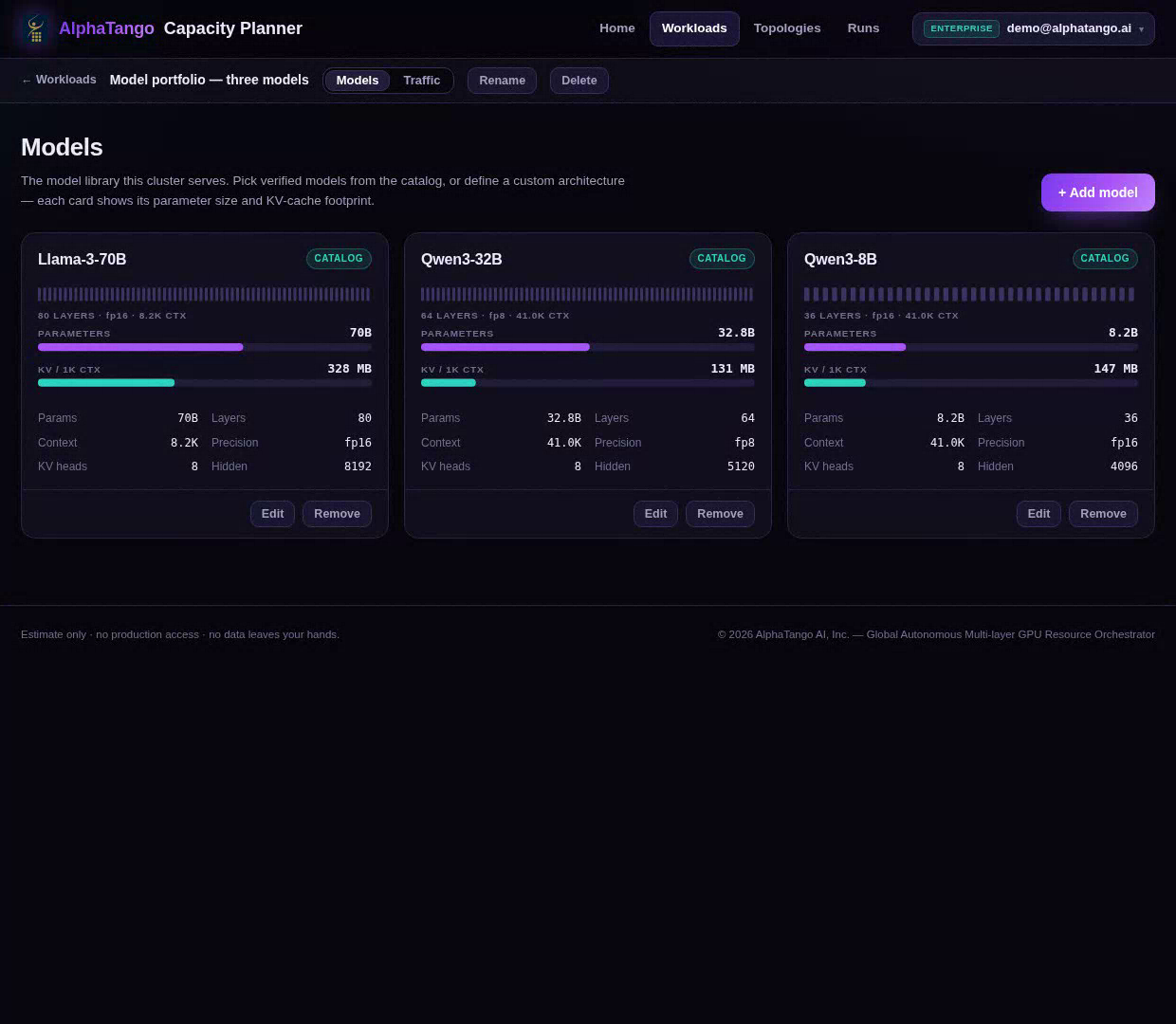
Llama-3-70B (chat and nightly reports), Qwen3-32B (a code assistant with long prompts) and Qwen3-8B (realtime voice): 130 requests a second in four traffic patterns. Two clusters: DGX H200 racks and Vera Rubin NVL144 racks, joined by a fabric.
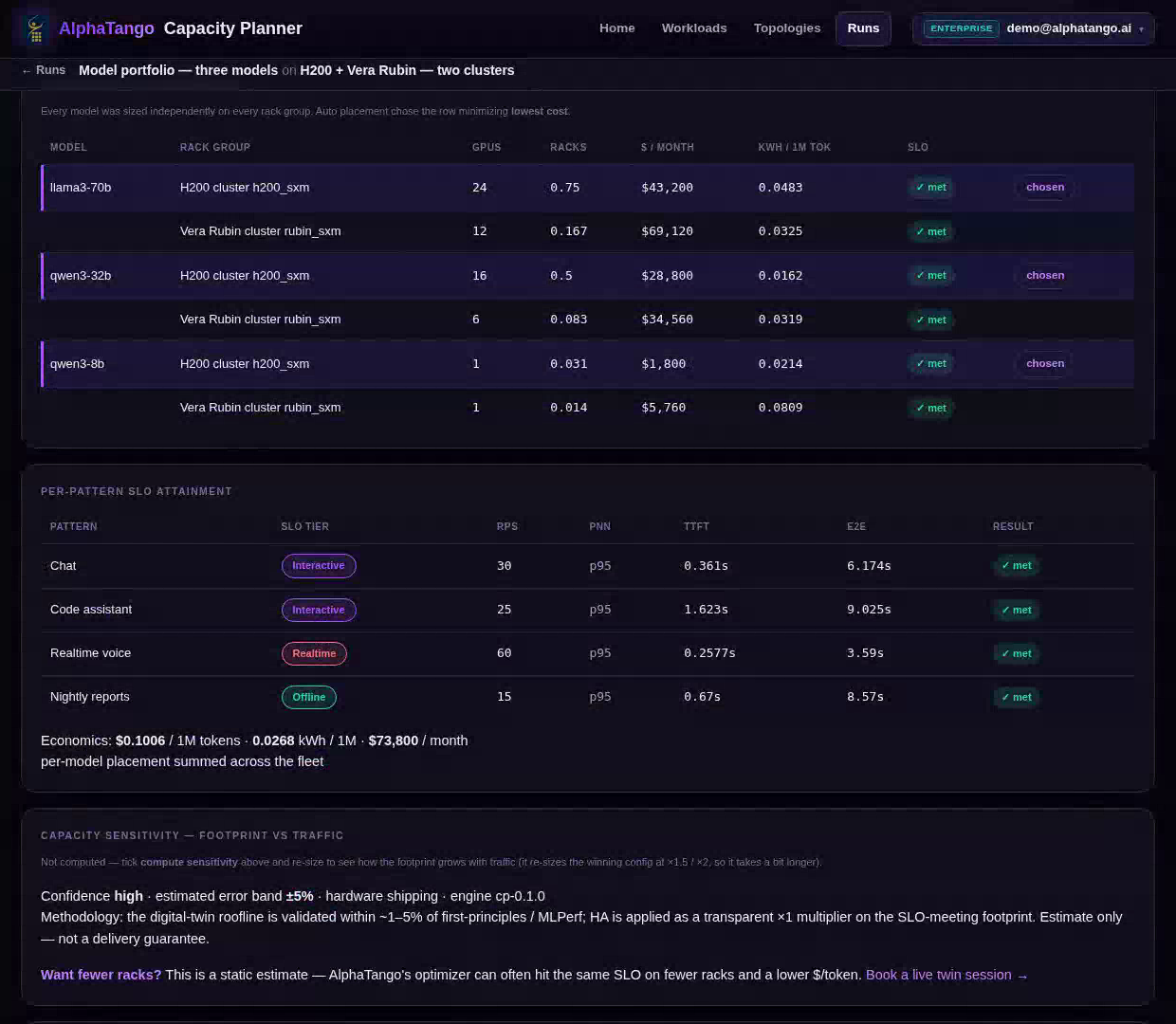
Every model sized on both generations. Llama-3-70B: 24 H200 GPUs ($43,200 a month) or 12 Rubin GPUs ($69,120). Qwen3-32B: 16 H200 ($28,800) or 6 Rubin ($34,560). Qwen3-8B: 1 GPU either way ($1,800 or $5,760). Optimizing for the lowest cost it chose H200 for all three: 41 GPUs, about $73,800 a month, every promise met. Rubin prices are pre-launch estimates; optimizing for the fewest GPUs would pick Rubin.
02The Capacity Planner's report
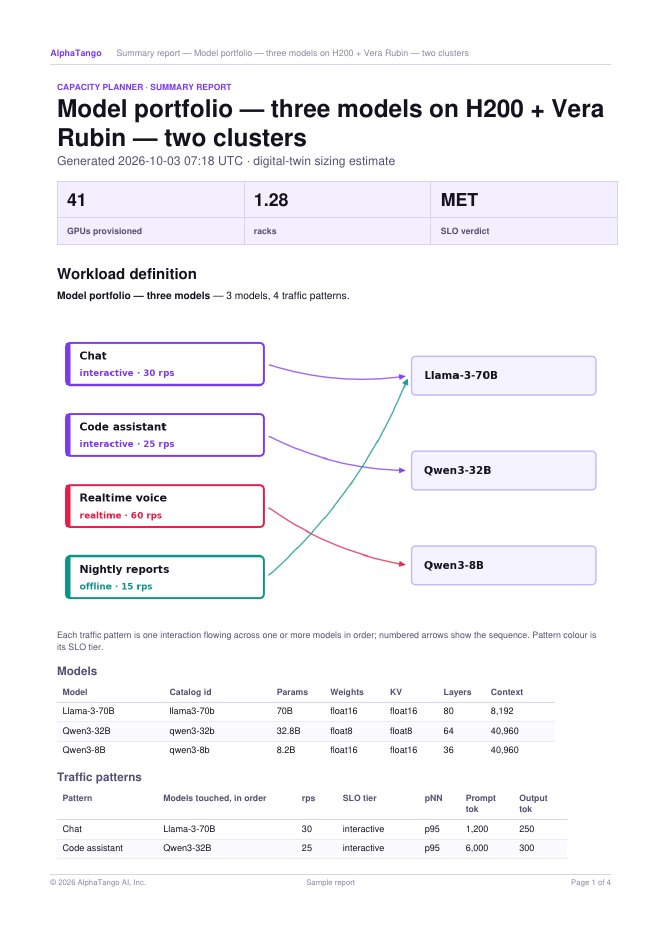
Every run produces a report you can share: the workload, the recommended cluster, each traffic pattern against its speed promise, and the economics. This is the summary report from this demo, exactly as the Capacity Planner produced it.
03Watch
The demo in 38 seconds.
The real Capacity Planner screens, sped up.